Today
Avenues, fields and silence
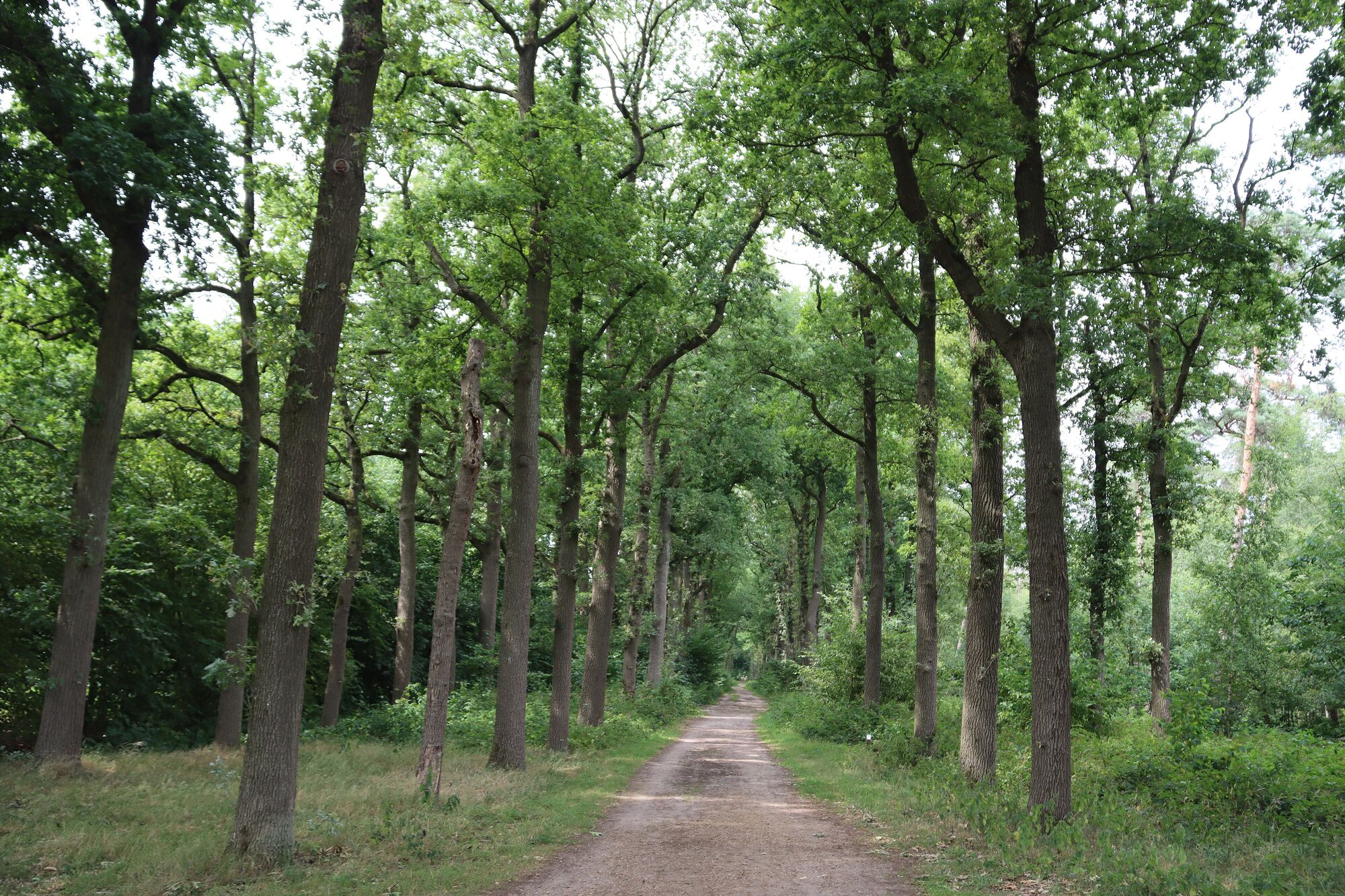
Not one of the farms of 1822 is still standing. The grid they stood in is: kilometres of straight avenues between fields, woods and heath. Since 2021 Wortel-Kolonie has been World Heritage.
World Heritage
On 26 July 2021 Unesco inscribed the Colonies of Benevolence on the World Heritage List. The inscription covers four colonies in three component parts: Frederiksoord-Wilhelminaoord and Veenhuizen in the Netherlands, and Wortel in Belgium. That makes Wortel-Kolonie the first Belgian cultural landscape on the list. Merksplas-Kolonie is not part of the inscription.
“Wortel is a hybrid Colony, first built for families and called ‘free’, later inhabited by beggars and vagrants and catalogued as ‘unfree’.”
The estate, about 550 hectares, has been a protected landscape since 29 June 1999. Since 2017 it has also been a designated quiet area.
What is left of 1822
What remains of the first colony is its outline: the grid of roads, the ditches between the plots and the central crossroads. The cadastral division still follows that of the free colony. The farms themselves have gone, as have the four buildings in the centre. The plots are what is left of the farmyards.
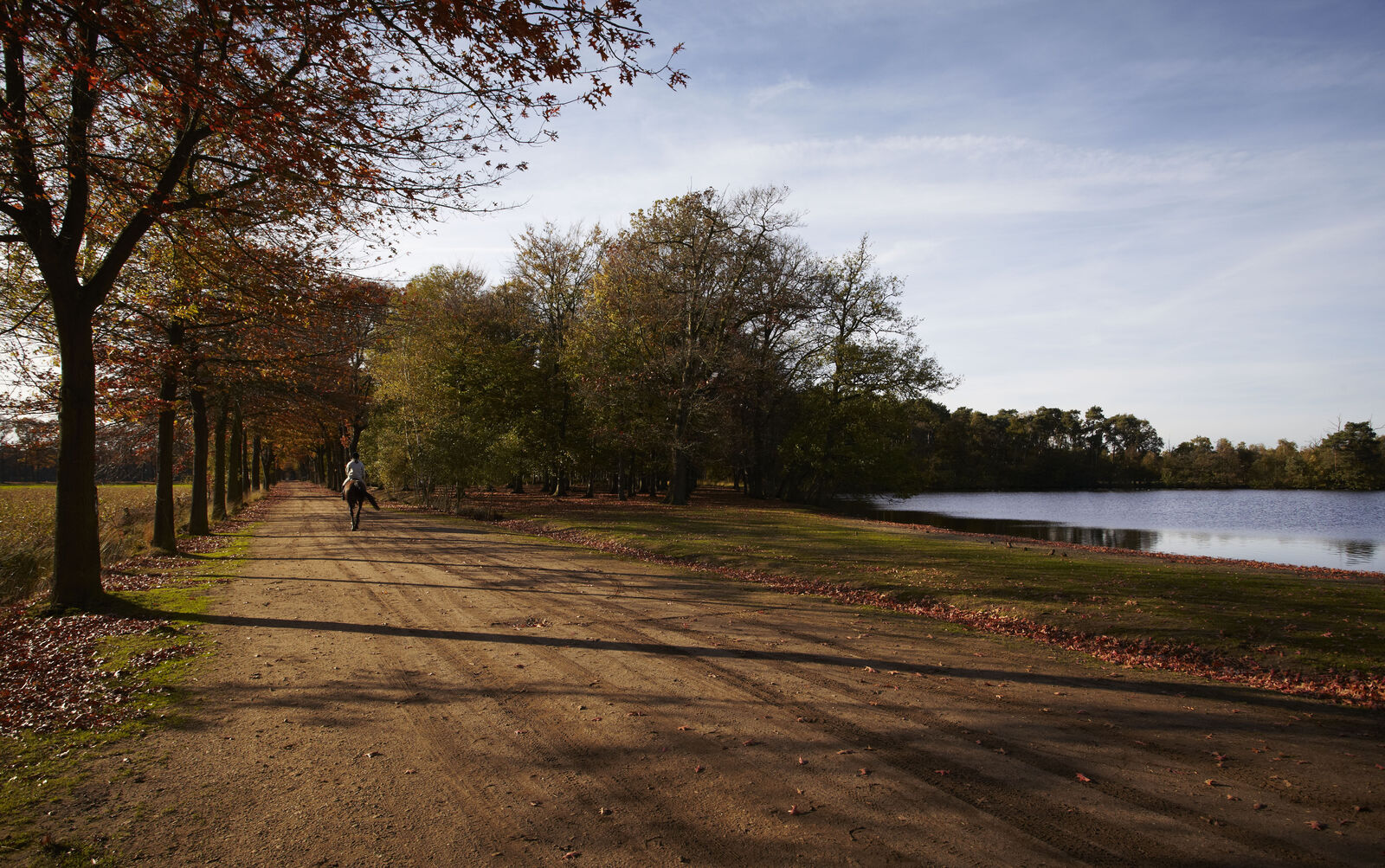
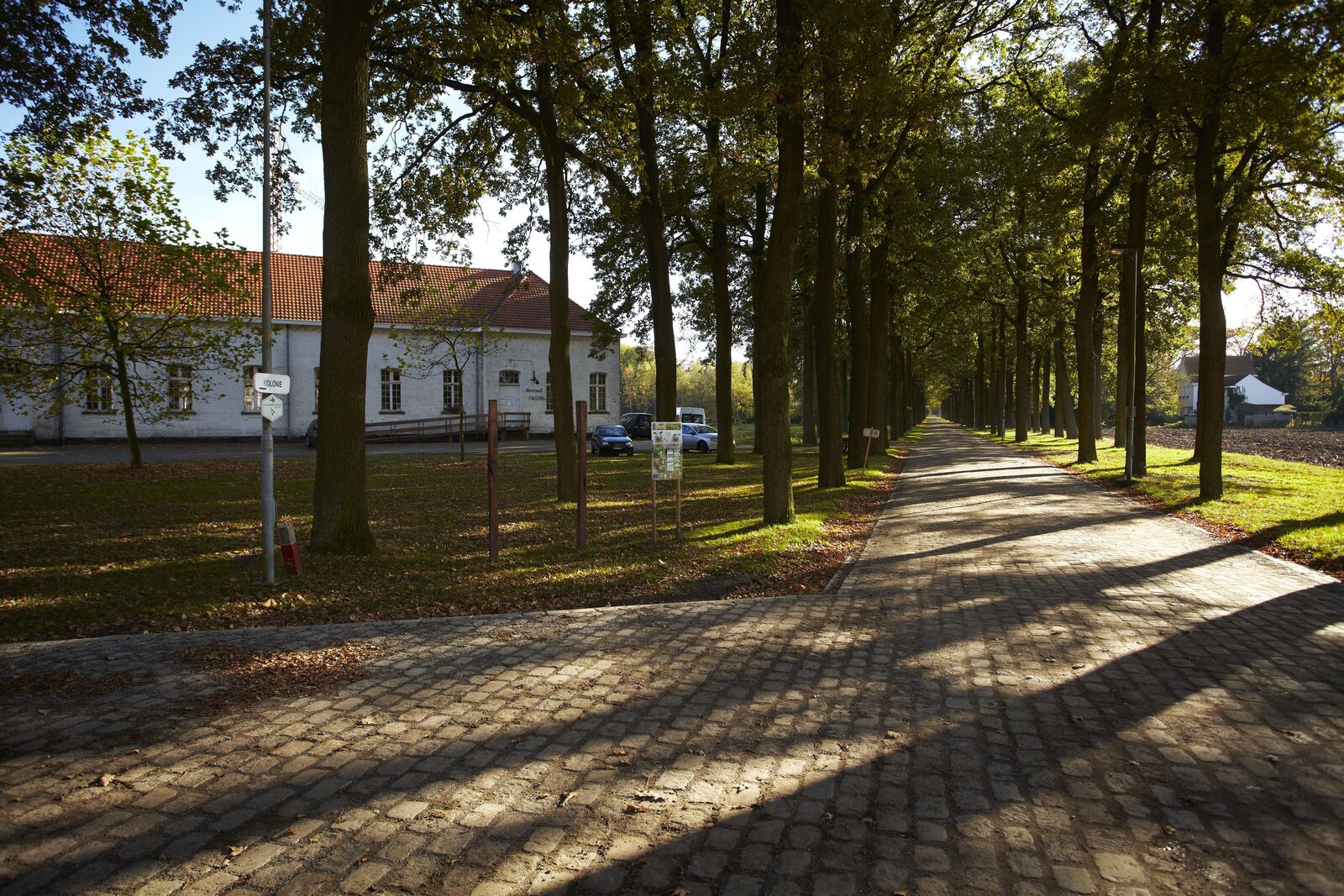
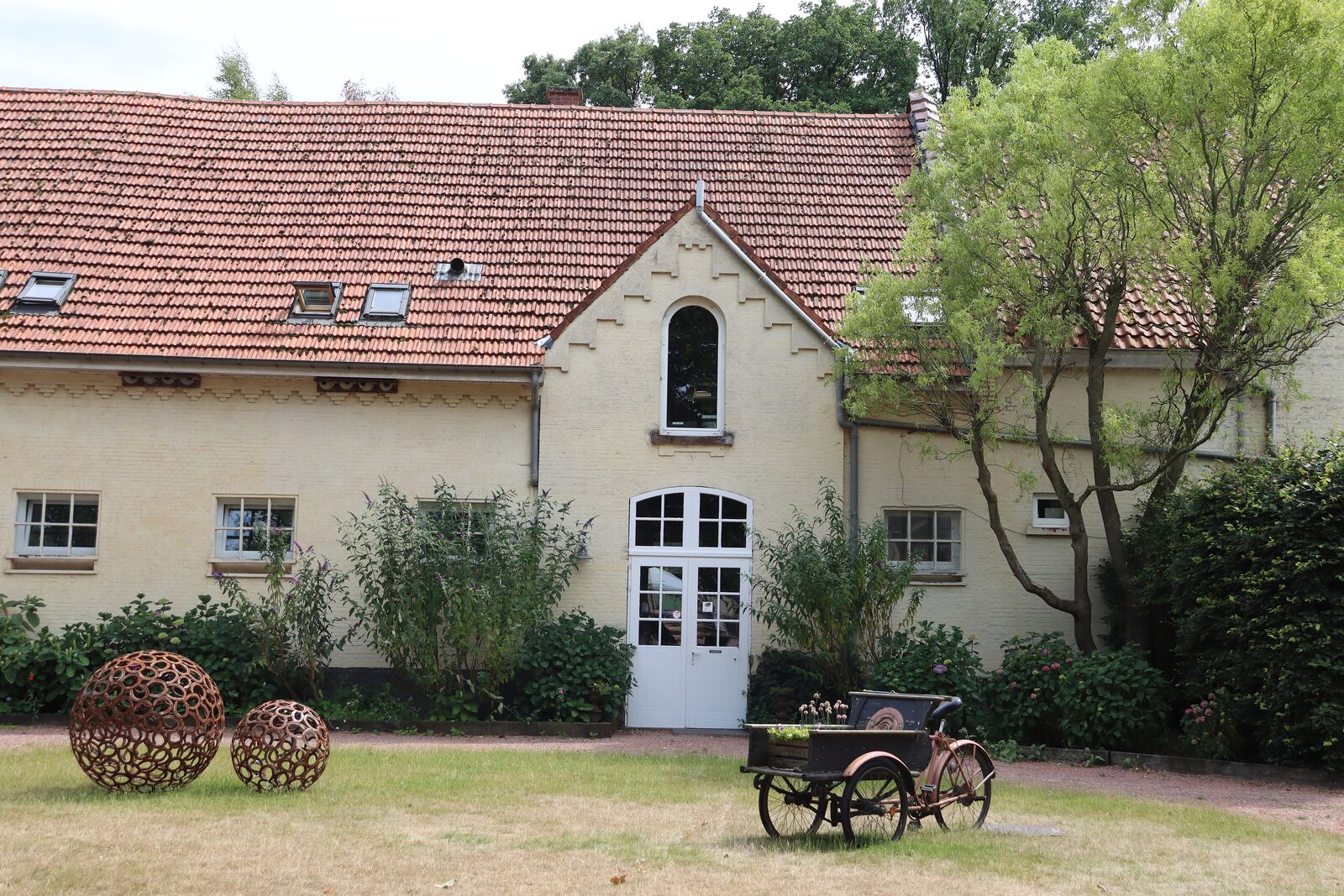
Today's avenues were planted in the time of the state colony, mostly with pedunculate oak, and also with red oak, beech, lime and poplar. Nearly all the buildings you see date from 1880 to 1898: the main building, the farm, the Casino, some twenty staff houses and the workshops, in plain brick. Some stand at an angle to the road, as the buildings of 1823 did at the crossroads.
What you can see
The heart of the colony
Crossroads of the Four Buildings
The two main avenues cross here. Around the crossroads stood the director's house, the school, a warehouse and the spinning hall of the free colony.
Visitor centre
The vagrants' farm
The large farm of the state colony (Landlopersboerderij). One wing houses Natuurpunt's visitor centre De Klapekster, where the walks start. The same farm houses De Landloper, an experience centre (belevingshuis) with a café and an escape room about the lives of the vagrants.
Building
The Casino
Built around 1893 as a barracks, later the staff's festival hall. Today it is used by the Widar community.
Place of remembrance
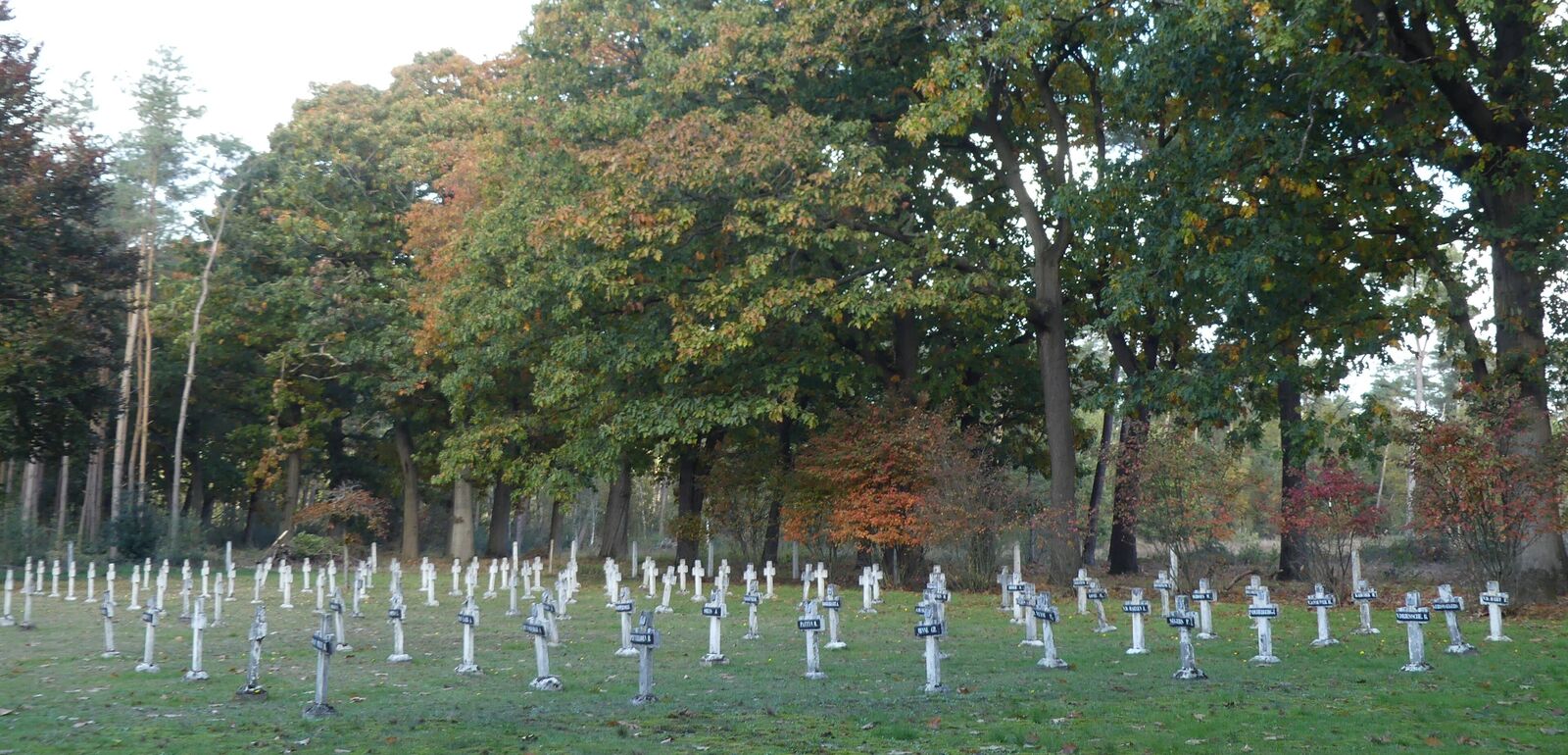
The vagrants' cemetery
Small white crosses along one of the northern avenues. The lead plates often carry only the number a vagrant was given on arrival, not a name.
Nature
Bootjesven
A fen that was deepened to cut peat. The guards of the colony used to come and swim here with their families. That is no longer allowed.
Landscape
The avenues
Large open fields and meadows alternate with woods, heath and fens, set in a grid of avenues. You can walk, cycle and ride here.
The main building has been a prison since 1996 and cannot be visited.
How the estate was saved
When the vagrancy law disappeared in 1993, the Belgian state wanted to sell the farms and the woods. After protests the estate passed into the hands of public bodies. In 1997 the province of Antwerp and some forty municipalities founded the association Kempens Landschap for that purpose.
Today everything in Wortel-Kolonie is publicly owned: by the city of Hoogstraten, the Flemish Land Agency, the Agency for Nature and Forests, the federal Buildings Agency, the water company Pidpa and Kempens Landschap. Kempens Landschap is the point of contact for the Belgian part of the World Heritage property.
Planning your visit
Opening hours and walking maps are with the organisations themselves. These links open another website, mostly in Dutch.
- Kolonie 5-7: walking, cycling and visiting in Wortel-Kolonie and Merksplas-Kolonie. The Kolonie 5-7 visitor centre, which tells the story of both colonies, is in Merksplas-Kolonie.
- Visitor centre De Klapekster of Natuurpunt, in the vagrants' farm of Wortel-Kolonie.
- Belevingshuis De Landloper, also in the vagrants' farm: a café with a terrace, an escape room about the lives of the vagrants and a trail game of about 8 kilometres through the colony.
- Agency for Nature and Forests: the nature reserve.
- Unesco: the Colonies of Benevolence on the World Heritage List.
Looking for an ancestor
Did your ancestor live in Wortel as a colonist between 1822 and 1846? Look for the name on the map. For the vagrants of the state colony, after 1870, Kolonie 5-7 has a search module of its own.